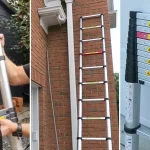
To ensure the telescopic ladder remains in good working order, it is necessary that we inspect it prior to every use for signs of corrosion, cracks, bent rungs, damaged stiles, worn feet, and faulty locking pins. We clean it with a soft cloth and mild detergent, then allow it to dry thoroughly before applying a thin layer of lubricating silicone to the locks and moving parts, taking care not to apply it to the ladder’s climbing surfaces. After removing the ladder, we should store it in a dry place.
We should call off the use of it if we notice that the extension was difficult, the pins failed, or it remained damaged even after the maintenance procedures. Furthermore, we keep exploring this topic for the most helpful and detailed maintenance instructions.
Table of Contents
Key Takeaways
- Before every use, we inspect the frame, rungs, stiles, feet, joints, and locking pins for cracks, corrosion, bent parts, wear, or damage.
- We clean the ladder with a soft cloth or brush and some mild detergent, then dry it in a well-ventilated area.
- We lubricate the locks and moving mechanisms with some silicone-based lubricant, taking great care to remove any excess and avoid applying it to the ladder’s climbing surfaces.
- We never use the ladder if we notice serious corrosion, faulty components, distorted parts, or if it was difficult to extend it even after lubrication.
- Before we store it, we always have the option to leave it fully closed and in a dry place. When transporting, we tie it with lashing straps.
Inspect Your Telescopic Ladder
Before every use, we inspect the telescopic ladder to make sure it is in good working condition.
We look at the overall structure and its frame for signs of rust, corrosion, or dents, which may compromise its integrity. It is essential to examine closely the metal portions for signs of oxidation or other damage that may compromise the strength of the unit.
Inspect the frame, joints, and extension mechanisms for rust, corrosion, dents, or other damage that could compromise safety.
We also test the moving mechanisms or any locking mechanism by extending and retracting them several times to make sure they smoothly return to their original position. We apply some silicone-based spray to the appropriate places if we find it difficult to move.
We avoid using the ladder if we find serious corrosion, distorted parts, or a malfunctioning extension mechanism that was not fixed after the maintenance procedures.
Check the Rungs, Stiles, Feet, and Locking Pins
Before every use, we should check the rungs, stiles, feet, and locking pins for signs of cracks, bends, or wear.
Cracked or bent rungs are potentially dangerous and should be replaced immediately. We should look over the stiles, or the vertical rails, for dents, corrosion, and other issues. We examine every foot for damage and make sure that it has a sufficient grip. Every locking pin should be checked to see if it is firmly attached and functioning correctly. We pay attention to any loose or missing parts and do not use the ladder until the problem is resolved.
These inspections help us to climb with confidence and reduce the risk of the ladder slipping or collapsing.
Clean the Telescopic Ladder
Once we have finished inspecting the rungs, stiles, feet, and locking pins, we clean the telescopic ladder with a soft cloth or brush, carefully removing any dirt or debris along the way. We avoid using a hosepipe, as the pressure may remove some of the essential lubricants and affect the proper functionality.
To remove stubborn stains, we use a damp cloth with some mild detergent, and make sure to wipe away every trace of the liquid and the loosened dirt.
After cleaning the ladder, we leave it fully extended in a well-ventilated area, where it will be able to dry completely.
Leave the ladder fully extended in a well-ventilated area until completely dry before storing it.
This simple step should be a part of our maintenance routines. It plays a vital role in the longevity of the ladder, as well as its proper functionality and safety.
Lubricate the Locks and Moving Parts Safely
To keep the ladder functioning properly, we lubricate its locks and moving parts with a silicone-based lubricant.
Unlike oil, this particular substance helps to prevent the accumulation of dust and debris.
- We apply a small amount of the lubricant to every locking mechanism, then wipe away the excess. This way, we prevent the unnecessary buildup of dirt around the pins and joints.
- We also check every locking pin and mechanism for signs of wear or looseness while lubricating. If we find any, we stop using the ladder and have it repaired or adjusted before we use it again.
- We remember to lubricate the locks and the moving mechanisms every few months or after every heavy use. This helps to keep the ladder properly functioning and increases its service life.
We keep the lubricant away from the rungs and other climbing surfaces, as it can make them slippery.
We also work in a well-ventilated area and make sure to follow the instructions on the label to keep everything in order.
Retract and Close the Ladder
Before we retract the ladder, we make sure that it is fully extended and that there are no obstacles in the way, which can get caught between the rungs and cause serious injury.
We always follow the manufacturer’s advice and make sure we are in the right position before we release any of the ladders’ locking mechanisms. We then proceed to slowly disengage one of the rungs while supporting the ladder. We never drop it or try to force the locking mechanisms or place any of our hands between the rungs that we are trying to lower – this can lead to serious injury.
Once the ladder has been retracted, we check to make sure that it has properly locked and is not going to unexpectedly open again.
After collapsing the ladder, confirm it locks securely closed to prevent accidental opening during handling or transport.
During the maintenance process, we always check the release buttons, locks, and rails for signs of wear, cracks, looseness, or other issues.
Store the Telescopic Ladder in a Dry Place
After we have retracted and secured the ladder, it is a good idea to store it somewhere dry and away from dust.
We keep it fully closed and in a place where it has enough space so that we do not place unnecessary strain on the mechanism or cause any damage to its functionality.
The following are good reasons for a suitable location:
- Keep the ladder indoors, in a dry place, away from humidity, leaks, and wet floors. The aluminium frames easily oxidize when exposed to moisture, which can, in turn, lead to serious structural issues.
- If it is impossible to keep it inside, cover the retracted ladder with a waterproof cover. We make sure that the lashing is secure but also that the storage space allows enough ventilation, as trapped condensation can also cause serious damage.
- We keep an eye on the storage conditions and make sure that they are not likely to change drastically.
We avoid keeping the ladder close to radiators, boilers, or areas of direct sunlight, as the heat can negatively affect its components and joints.
A clean and stable storage space will help us keep a reliable structure for an extended period of time.
Transport the Ladder Without Causing Damage
When we have to transport a telescopic ladder, we keep it secured with lashing straps and always make sure that it is fully retracted to avoid any unnecessary movement or the risk of damage.
Before we depart, we double-check that every strap is secured and that any clamps or other tools used to secure it are locked.
We carry the ladder with both hands and keep a proper grip, so that we do not drop it or put unnecessary pressure on its structure.
We always endeavour to keep it inside the vehicle, if possible, instead of leaving it to overhang.
If it is impossible to avoid such a situation, we can attach some reflective flags or lights to the ladder so that it can be seen by other vehicles.
During the trip, we stop to double-check the state of the straps and any other securing devices, which should be reinforced if necessary.
Avoid Water, Dirt, and Unsafe Adjustments
We avoid exposing the ladder to water and never clean it with a hosepipe, as it can remove essential lubricants and cause serious damage to its mechanism. After every use, we wipe every surface with a soft, dry cloth or brush, removing any moisture, dust, and dirt.
- We periodically inspect the locking mechanisms and the retraction system, removing any accumulated dirt, so that the sections smoothly retract and extend.
- We store the ladder fully retracted in a clean, dry place, away from dust and debris.
- We make sure not to adjust the height of the ladder while we are using it. We always descend, place the ladder securely, and carefully adjust it before we begin our task.
These measures help us to keep a properly functioning ladder, which should reduce the risk of any unforeseen incidents during its use.
Decide When to Repair or Replace It
How can we tell if our telescopic ladder needs to be repaired or replaced? We should inspect the ladder before every use and be on the lookout for any signs of damage or potential issues.
Faulty locking mechanisms, which are unable to secure every other section should be repaired by a professional or replaced to prevent any accidents.
Cracks, bent rungs, or any other signs of damage should prompt us to replace the ladder instead of attempting any repairs.
If the ladder fails to properly extend or retract after lubrication, its replacement will help us avoid any potential incidents.
Rust or corrosion, especially on metal parts, can seriously compromise the integrity of the structure, so we should replace the ladder if we notice it.
We must also remember that the 150kg limit should not be exceeded – this will reduce the risk of injury and will ensure the ladder remains safe and reliable.
Frequently Asked Questions
Can I use a telescopic ladder outdoors in extreme heat or freezing temperatures?
We can use the telescopic ladder outdoors, away from extreme heat or freezing temperatures. These conditions can seriously compromise the integrity of the structure, stiffen the locking mechanism, and reduce our grip, so we should follow the manufacturer’s instructions and inspect the equipment before every use.
How often should I have my telescopic ladder professionally inspected?
We recommend that we have it professionally inspected at least once a year. If there were any incidents, it was recently exposed to extreme conditions, or we have reason to believe it might be compromised, we should schedule the inspection as soon as possible.
What weight limit should I follow when using my telescopic ladder?
We should always adhere to the weight limit recommended by the manufacturer, which includes our body weight, clothes, gear, and materials. We should never exceed it and replace the ladder if the limit was not indicated.
Are replacement parts available for my telescopic ladder model?
Yes, there are usually replacement parts available for every model of telescopic ladder. We recommend that we examine its manufacturer, model, and manual, before contacting the company for further assistance. We should never utilise any other components as they may compromise the ladder’s integrity.
Can I paint or modify my telescopic ladder without affecting its safety?
No, we should not paint or modify our ladder as it can compromise its integrity and affect the locking mechanism or our grip. We will advise only on the appropriate parts, tools, and instructions provided by the manufacturer.
Conclusion
By caring for our telescopic ladder, it will care for us by helping us to work safely for many years. Prior to each use, the ladder should be inspected, cleaned, lubricated, retracted, and stored appropriately. Transportation of the ladder is also significant. In addition, it is vital to avoid using the defective ladder, address problematic locking mechanisms, and ensure that ladder feet are not worn out since these issues can lead to an unsafe working environment. That is why it is critical to check all details before our next use of the telescopic ladder, since one defective detail can harm us if we do not pay enough attention.

DIY enthusiast and editor of Best Ladders.