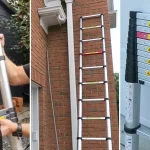
The most frequent problems in telescopic ladders are broken rung locks, bent rails, cracked or broken rungs, corrosion, and misalignment. We need to check all the locks and indicators, pins, rails, and rungs for proper functioning and signs of damage before climbing. In addition, we need to ensure that the ladder is free from dirt and debris, which can contribute to its improper operation. We need the ladder to store it in a dry place to prevent it from rusting. We need to always hold the ladder at a safe angle of 4:1 and use the three points of contact. Several safety tests can be performed to make the climb safer.
Table of Contents
Key Takeaways
- Sheared locking pins, bent or broken locking pins, worn locking pins, or corroded locking pins can prevent sections from locking
- Rungs can crack, become unsecured, or wear out
- Rails can bend, warp, corrode
- Debris, grit, and water can block the way of the locks and cause corrosion or unsecured sections
- There could be a missing green lock showing that the ladder is not properly secured which can cause it to collapse
Check the Locks of the Telescopic Ladder prior to Use
Before climbing, we should check the locking mechanism of every rung and make sure all lock indicators are green. This is a simple procedure for checking for an unsecured rung before putting a strain on the ladder.
Check every rung's lock indication before climbing to ensure that each is securely engaged and displaying green.
A telescopic ladder should only be used if every rung indicates a clearly visible green color to signify that their locks are properly engaged. We must not forget to do this simple procedure as a matter of habit because just one insecure rung can cause a potentially deadly fall.
When we do this simple safety procedure we should also check the locking pins for any sign of wear, bending, cracks or other damage and cease use of the ladder immediately if any of these issues are discovered. We should not climb an extension ladder until all rungs are properly locked and displaying the correct indication.
This simple procedure improves stability and helps ensure that we are safe while using an extension ladder.
Inspection of Rails, Rungs, and Locking Parts
It is crucial to inspect rails, rungs, and locking parts regularly to ensure that they are not defective. A ladder should be examined while extended and folded to reveal possible defects that could affect a person’s movement or the tool’s ability to hold a person’s weight.
- It is essential to check rails for any bends and deformations, corrosion, or other issues.
- In addition, all rungs should be inspected for defects, excessive wear, or loosened parts.
- It is also necessary to test each locking pin by checking whether it is possible to see a pin’s full extension and how the locking elements engage.
- One should also make sure that the locking parts are not blocked by any dirt or debris.
- Lastly, it is vital to ensure that all rails are properly aligned when the tool is fully extended or collapsed.
If you discovers any defective rails, rungs, or locking parts, it is better not to use the ladder until the problem is resolved by a professional.
A person should also avoid using a ladder if at least one pin does not hold the rails tightly.
Proper inspection of all parts made it easier to avoid serious issues such as unexpected ladder movement.
Prevent Dirt, Moisture, and Corrosion Damage
In addition to the previously mentioned precautions, cleanliness and a dry environment are critical to protecting the rails, rungs, and other locking mechanisms we have discussed. Before we store our telescoping ladder, we must make sure that we have removed any dirt, grit, and other contaminants.
Remember to keep each ladder section clean and dry in order to protect railings, steps, and other locking mechanisms during storage.
We must also make sure the ladder is completely dry to prevent rust, which weakens the metal, and other structural problems. Dirt and grime could clog a telescoping ladder’s locking mechanism, reducing its effectiveness.
Following this, we need to make sure we have retracted the ladder as far as possible before storing it upright in a clean and dry place. We must keep it away from sheds, garages, or any other places where condensation and moisture might build up.
During routine maintenance, we can inspect every part of the telescoping ladder for fresh dirt, dampness, discoloration, and other signs of rust or damage and respond accordingly. By doing this, we can protect the alignment of a telescoping ladder and its structural integrity for a long time.
Setting up and using the ladder safely
To ensure safety, prior to each use, inspecting the ladder for any defect that may interfere with its proper functioning is essential. The ladder should be set up on a firm and stable surface.
The ladder should also be placed at a safe angle (4:1).
Before climbing, make sure to fully extend all ladder sections. Always check that all locking devices are engaged (each time you hear a click, a section is properly extended and locked). It is critical to stop any accident or injury that may occur due to a missed step.
- When climbing ladders, our bodies should be kept centred between the rails
- We should also maintain contact with the ladder by using three points of contact at all times
- We should avoid carrying tools or any objects while climbing and climbing on a ladder alone should be strictly prohibited.
- In addition, we should never reposition the ladder while on it and always lower the ladder completely
- After use, fully retract it and store it in a dry place.
Furthermore, we should only climb ladders when the job site is safe and all the ladders’ locks are properly engaged. Finally, we should avoid climbing ladders as quickly as possible to prevent accidents and injuries.
Choosing a proper ladder and conducting regular inspection
Our first measure refers to selecting the appropriate EN131 certified telescopic ladder, which is designed to hold up to 150 kg weight. It guarantees our safety due to its high-quality conformation to the established standards.
We also make sure to check all locking systems during the ladder’s installation and before using it every time. In addition, we look for any cracks, bends, or other issues on the ladder’s frame.
We ensure that each step’s locking mechanism is fully engaged before climbing due to potential injuries that can occur if a single step is not locked. Double-checking allows us to prevent such hazardous situations and guarantees our safety.
In case of frequent use or exposure to demanding environmental factors, we take the ladder to a specialist for inspection and maintenance once a year.
Finally, we store the ladder in the rolled position and a dry place to ensure that it is not exposed to moisture or other environmental factors that can weaken its construction.
Frequently Asked Questions
How often should a telescopic ladder be replaced?
We should change a telescopic ladder if it is broken, worn, unstable, or failed inspection. It should only be used until signs of damage or wear appear. We must check a telescopic ladder before using it and rely on the manufacturer’s instruction.
Can telescopic ladders be repaired after a fall?
It is possible to mend some defects, and we should take care of it. However, we cannot repair a broken telescopic ladder. Moreover, if it was damaged during the fall, we should not use it further. For example, we should not try to use a ladder with bent rails, faulty locks, or another mechanism failure. A qualified worker should fix the ladder if it is possible or replace it in case of structural damage or instability.
What weight capacity should a telescopic ladder have?
We should choose a telescopic ladder that can bear our weight, the weight of materials and tools, and the additional load. Usually, such a ladder can withstand 150 kilograms, but we should check the manufacturer’s instructions. Nevertheless, we should not overload it to avoid accidents.
Are telescopic ladders safe on an uneven surface?
We should not use a telescopic ladder on a declining surface. We should only work on the ground, use a ladder with a reliable lock mechanism, and make sure that it is safe. If the place of the ladder’s placement is uneven, we should use a ladder that can be adjusted or wait for the right time. Remember that the ladder should guarantee the working person’s security, so we should not risk using a broken or defective ladder.
How should a damaged telescopic ladder be disposed of?
We should throw it away in the recycling bin according to the local waste management rules. Moreover, we should not try to use it, mend it, leave it in the wilderness, or put it in the regular trash bin. We should also make sure that the ladder is secured during transportation to the place of recycling.
Conclusion
Checking of locks, rails, rungs, and locking mechanisms during each use may prevent the most common failures that may occur in a convenience ladder. Moreover, proper maintenance and cleaning of the ladder should ensure its stable functioning. Combined with the safe assembly and inspection, this preventive approach will guarantee the safe use of a telescoping ladder. By the way, this simple procedure, along with a few seconds of attention, is the best safeguard against dangerous situations like falls from height. Therefore, let us try to choose only safe and reliable equipment and carefully maintain it.

DIY enthusiast and editor of Best Ladders.