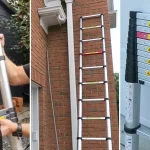
We will identify the type of ladder needed for a specific job by determining the design, height, and conditions of the work area. We will choose a step ladder for indoor jobs, an extension ladder for outdoor heights, and a multi-purpose ladder for versatility. We will also consider a platform ladder for long tasks and a loft ladder for accessing the attic. It is essential to measure the working height, determine the weight capacity, assess the stability, and identify EN 131 standards. We continue by learning how to use each type of ladder to get the most out of it.
Table of Contents
Key Takeaways
- Choose step ladders for indoor tasks such as changing bulbs, reaching shelves, or performing short-duration maintenance.
- Use extension ladders for outdoor work, including painting, gutter cleaning, and accessing elevated areas.
- Select multi-purpose ladders when you need versatile configurations for varied indoor and outdoor tasks.
- Choose platform ladders for prolonged standing, and foldable loft ladders specifically for loft access.
- Check height, weight capacity, stability, EN 131 compliance, and safety features before using any ladder.
What Height of Ladder Do You Need?
Before selecting a specific ladder, we measure the working height by identifying the distance from the floor to the highest point we need to reach and add an extra meter for safety. We will also identify the 4:1 rule by using the bottom of the ladder to measure the distance from the base of the wall to the ladder and ensure that the ladder’s height is four times that measurement.
A typical step ladder working height is 1.8 to 2.1 m when changing light bulbs or reaching shelves. An extension ladder’s height ranges from 3.6 to 4.2 m when painting the ceiling. For two-story gutters, we can use an extension ladder that is 3 to 4.5 m high. We will also consider the weight, including our body weight, materials, and tools.
Choose the Right Ladder for Your Task
We use step ladders for indoor jobs because they can bear our weight and provide stability. Step ladders usually span a maximum of 2.1 m and are adequate for most indoor activities. They are also perfect for use in small areas such as at home or in an office because they do not require much width. Because of their lightness, we can easily carry them from one room to another.
Before use, we ensure a wide stance by spreading the steps fully and locking them in place. We will also identify the non-slip steps and the body contact points. We should place the ladder on a dry, stable, and flat ground and avoid climbing on the top step.
Use Extension Ladders for Outdoor Heights
We use extension ladders for outdoor heights because they are adjustable and can be safely used in a stable position. We can use them to reach a height of 2.2 m to 5.5 m. Extension ladders are appropriate for painting the house and accessing the gutter. We will also use the 4:1 rule to identify the base length by using a measuring tape.
Before climbing, we should ensure that the ladder is placed on a stable, flat, and dry ground. We will also inspect the locking mechanisms. Aluminum ladders are relatively strong, and we can carry them to the working site. We will also ensure the absence of hazards around the working area.
Pick Multi-Purpose Ladders for Flexibility
We use multi-purpose ladders when we need a ladder that can be used outdoors and indoors and be converted between an A-frame and an extension ladder. We can use them for home repairs and painting. The ladders are ideal because most of them have a maximum height of more than 4000 mm. We can use them to access the ceiling, wall, and roof. They also allow us to change the working height and angle for our convenience.
Many are designed to exceed 4 meters, offering adjustable heights and angles for safer and more efficient access to ceilings, walls, and roofs.
Because of their relatively lightness, we can easily move and carry them around. As DIY enthusiasts and electricians, we should look for ladders with anti-slip steps and locking mechanisms on the hinges and spreaders. We will follow the manufacture’s instruction for setup, locking, and placing the ladder on a flat and stable surface.
Select Platform Ladders for Long Jobs
We can consider platform ladders for long jobs because they offer a stable and broad working platform for our maintenance and repair activities. We use them to paint, install fixtures and finish electrical works because they allow us to work on a horizontal ladder. We will also look for ladders with guardrails on the open sides for our safety.
For safety reasons, we will ensure the working height is above our head; thus, allowing us to carry materials and tools on the ladder’s platform. We will also identify the weight capacity specified by the manufacturer to ensure we do not exceed it. Some ladders have wheels for mobility; therefore, we should lock the wheels before climbing. We will also place the ladder on a stable and flat ground for safety reasons.
Choose Ladders for Lofts, Roofs and Gutters
We can choose different ladders for lofts, roofs, and gutters. For lofts, we can use a loft ladder or an extension ladder that reaches above the roof ridge by at least 1 meter. The roof ladder has a curved top that allows it to rest on the edge of the roof and is ideal for our solar panel installation and repair activities. For two-story houses, we will use a 3-4.5 m extension ladder to access the gutter. We should also ensure a 4:1 ratio for stable ladder placement and EN 131 standards for weight capacity and outdoor use.
| Job | Suitable ladder |
|---|---|
| Loft access | Loft or extension ladder |
| Roof work | Roof ladder |
| Gutter cleaning | 3–4.5 m extension ladder |
Check Safety, Stability and Weight Limits
After selecting the suitable ladders for our jobs, we will identify the weight capacity needed to support our body weight and the materials and tools we need. We will also ensure that the working load does not exceed the manufacturer’s specifications.
Next, we will consider the stability aspects. We will also select ladders with a wide base and ensure that we place them on a flat and stable surface. We will avoid placing them on slippery or unstable grounds. When using a leaning ladder, we will ensure that the bottom of the ladder is one-quarter of the ladder’s height away from the wall.
We will also examine the rungs, rails, and joints for defects such as cracks and bends. We will test out the locking mechanisms for the extension and multi-purpose ladders to ensure there are no malfunctions.
Frequently Asked Questions
How Should I Store My Ladder To Prevent Damage and Rust?
We should store ladders indoors in ventilated areas that are not exposed to moisture and sunlight. We should also store it horizontally with stabilizers to avoid collapse and ensure the material is dry and free from impurities before storage.
What Ladders Accessories Can Improve Safety and Convenience?
We can add stabilizers, levelers, tool trays, non-slip rubber feet, and safety rails to our ladders for improved convenience and safety. We should also attach a harness when necessary. We will ensure that the accessories are functional and avoid using non-compatible accessories.
How Often Should I Inspect or Replace My Ladder?
We should inspect the ladders before use, after an incident, and at least once every month when using them frequently. We should also replace the ladders when we notice bends and cracks, loose fittings, and worn-out rubber feet, and markings that indicate the working load and height.
Can I Transport a Ladder Safely in My Vehicle?
Yes, we can transport ladders in our vehicles. However, we should avoid placing them in the trunk because they can cause damage to the vehicle and the ladders. We should also use roof racks, protect the vehicle parts and flag off the ladders.
What Should I Do if My Ladder Becomes Damaged During Use?
If our ladder slips away like Icarus, we should descend immediately, and seek medical help. We should avoid using faulty equipment and ensure the safe working conditions before use. We can also isolate the faulty ladder and label it for repair.
Conclusion
Right choice of a ladder enables its safe and comfortable use. In this way, it will help to accomplish tasks of various levels of complexity: from changing bulbs in the loft to cleaning the gutters. Paying attention to the subtleties of each particular case, choosing the right type of equipment, and taking into account all the details (weight and height) will help achieve the goal. A step ladder will be used inside the house, an extension ladder will be used outdoors, a multi-functional ladder will be used in all places, and a platform ladder will be used when extra time is needed to get the job done.

DIY enthusiast and editor of Best Ladders.