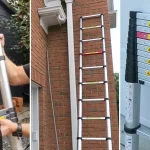
We will explore different ways and guidelines on how to use telescopic ladders. First of all, we should examine the railings, rungs, feet, and locks for any signs of damage or dirt. Second, we should assemble the equipment on a firm level surface avoiding hazardous objects and the 1-in-4 rule. Furthermore, we will learn how to extend each section of a ladder and make sure that all locking mechanisms are secure before climbing. While on the ladder, we should maintain a three-point contact and always face it. Moreover, we should balance our body on the ladder’s center and avoid overreaching. Finally, we will describe how to properly collapse a ladder, as well as some final words and conclusions.
Table of Contents
Key Takeaways
- The user should inspect the rails, rungs, feet, and locks for any damages or dirt
- Place the ladder on a level surface and follow all preparation instructions
- Ensure that every expansion is fully secured before climbing
- Remember to maintain a three-point contact while facing the ladder, balancing your body on its center without overreaching
- Be aware of the weight limits and carry hand tools in a belt
- Clean the ladder after use and store it in a dry place
What Is a Telescopic Ladder?
A telescopic ladder is a versatile and portable ladder that can be adjusted to different heights by extending and contracting its parts. Telescoping ladders allow a person to work on multiple surfaces and perform various tasks, such as house painting or repairs. The device is primarily used domestically and occasionally in professional settings.
Most ladders can be stored in a cupboard, garage, car, or another place when not in use since their collapsed size fits the standard height. Telescoping ladders usually have a locking mechanism that ensures that each section is fixed and stable when fully or partially expanded. Rubber feet are attached to the bottom of the ladder to prevent slipping and provide a firm grip on the surface.
Modern ladders usually have a locking mechanism and are certified according to the EN 131-6 standard for aluminum ladders. Furthermore, rungs on these devices are wide and placed at an angle to allow the worker to hold them more comfortably and securely with hands or feet. People can choose the telescoping ladder and avoid buying several different types of equipment for home or office.
Check the Ladder for Defects and Dirt
Before using a telescoping ladder, a person should look for any signs of damage, wear and tear, or debris on the ladder’s parts and surfaces. The user should pay particular attention to the rail, rungs, hinges, and feet since these elements ensure the stable and safe positioning of the device.
The person should open each section and check if the locking mechanism is not broken. A defective lock can lead to an unexpected collapse of the ladder, which will result in serious injuries. The user should also look for foreign objects on the rungs and inside the ladder rails that can hinder the mechanism or cause slips and falls.
Furthermore, the person should ensure that the ladder rails do not have any traces of oil or other substances. Dirt, dust, and moisture can block the ladder mechanisms and reduce its performance. It is also essential to read the instruction manual and look for specific maintenance and preparation recommendations for the device.
Finally, the person can check if the ladder is stable on a level surface and does not tip to either side. They should also ensure that the legs are kept at the recommended 1-in-4 ratio and angle.
Choose a Suitable Surface and Position
One should position the ladder on a level surface and avoid using it on slopes, dirty or muddy ground, asphalt, or concrete. The person should decide on the work area and make sure that there are no overhead hazards, such as electrical lines, tree branches, or any other objects that can cause an accident.
The person should ensure that there is enough space around the ladder to move and work safely. They should also keep the ladder away from open doors, vehicles, and other objects that can obstruct the worker or the device itself.
When positioning the ladder against a flat surface such as a wall, the person should remember the 1-in-4 rule. The ratio is measured by the distance from the wall to the ladder’s base, which should be one for every four feet of the device’s height. The user should also look for an even floor where the ladder will not slip or roll during the work.
Assemble the Ladder According to the Manufacturer’s Instructions
Before using and assembling the equipment, the person should read all the instructions and understand the device’s mechanism and safety rules. Depending on the type and model of the ladder, it might include several safety closures or a special tool belt. The user should also pay attention to the recommended angle, weight, and height limits and other important information.
The person should position the ladder against a stable flat surface such as a wall and assemble it according to the manufacturer’s guidelines. The ladder should also be placed on a non-slip and level surface to ensure that the device is stable and will not roll over or fall during the work.
If the person has a ladder wall spacer, they should use it according to the instructions to ensure a stable position and avoid damaging the wall. Furthermore, the person should install the tool tray or use the built-in tool belt to store and carry hand tools to avoid using both hands to hold the device.
Extend and Lock All Sections of the Ladder
The person should open the locking mechanism or remove the elastic strap that keeps the ladder sections closed. They should hold the ladder at its lowest position on the floor and begin to extend each section until it locks. A person should ensure that each part is fully expanded and locked before proceeding to the next rung and section.
The person should always face the rung when extending or collapsing the ladder and maintain a three-point contact while climbing.
They should also ensure that their body is balanced and centered on the ladder railings. The user should avoid overreaching while working on a ladder since this can cause the device to overturn or the user to lose balance and fall.
It is also crucial to ensure that a ladder is not extended beyond the specified height and weight. Doing so will compromise the device’s stability and lead to hazardous situations, such as falling or ladder collapse.
Finally, the user should ensure that every rung is fully extended and locked before climbing. They should also test each rung before climbing since locked positions can fail due to improper locking mechanism.
| Check | What we do | Why it matters |
|---|---|---|
| Strap | Remove it first | Enables smooth extension |
| Sections | Open one at a time | Prevents missed locks |
| Height | Stop at the limit | Protects structural integrity |
The user should always ensure that all the sections are properly extended and locked before climbing. If a single rung does not lock, the person should not climb and fix it first.
Always Maintain a Three-Point Contact While Climbing
The user should climb slowly and steadily while maintaining a three-point contact with the device. They should always face the rungs and hold the ladder rails with both hands to ensure that they are on the ladder’s center.
They should only move one step at a time without being tempted to move both legs or to move too fast. The user should also avoid leaning back or over the ladder rails since this can cause them to lose balance and fall.
The person should not carry any tools with them while working on the device. They should store hand tools on the tool belt or on the ground and use them carefully, ensuring that they do not hinder their movements and ability to maintain a three-point contact.
Furthermore, they should not stand or step on the last three rungs of the ladder since this can be dangerous.
Before climbing a ladder, the user should ensure that it extends at least one meter above their working surface to provide a stable grip at the highest point. The user should always work near the middle of the railings and avoid leaning or reaching far to access objects.
Collapse the Ladder to Make Sure That No Fingers Are Trapped
The user should make sure that the ladder is fully closed and secured on a stable flat surface. They should also take off the elastic strap that keeps the ladder closed to ensure that the mechanism is not blocked and can be collapsed safely.
The person should hold the ladder at the opposite side of the collapsing mechanism and ensure that their fingers are not placed in between the rails. They should also follow the manufacturer’s recommendations and open every locking mechanism in sequence. The user should also hold on to the rails to control the collapsing process and ensure that the device is not falling on its own, especially at the highest sections.
The user should never force any mechanisms to open since this can lead to hazardous situations such as breaking the device or collapsing it unexpectedly.
Before continuing to the next step, the person should ensure that every section of the ladder is fully closed and locked. Furthermore, the user should take off their fingers from the rungs to ensure that they do not get trapped once the mechanism is fully collapsed.
Clean the Telescoping Ladder and Store in a Dry Place
The person should wipe the ladder’s rails, rungs, and locking mechanisms to remove any dust or dirt, which can hinder the device’s performance.
They should avoid using water or any other substances that can damage the ladder or get inside the rails and affect the locking mechanism. The user should also ensure that the ladder is completely secured and locked after it is fully collapsed to avoid any dangerous openings.
To store the ladder, the person should pick a dry place and avoid leaving it outside the house, where the device can be exposed to moisture or harmful weather conditions. They should also regularly inspect the rails, rungs, and locking mechanisms for any signs of wear and tear or malfunction.
Finally, the person should not store heavy objects on top of a telescoping ladder since the device is made of aluminum, and the weight can cause the rails to bend and affect the device.
Choose a Suitable Telescoping Ladder
The user should choose a ladder that is safe and meets all the standards concerning its intended use. It is essential to ensure that the device is certified according to EN 131-6 standards and can be operated safely.
Some ladders may have additional features that enhance the user’s experience, including larger rungs, safety closure, and indicators. The person should ensure that these details are available when selecting a ladder model and reading the instruction manual.
| Feature | What we’ll check | Why it matters |
|---|---|---|
| Larger rungs | At least 50% larger than traditional rungs | Improves comfort and grip |
| Safety closure | Included and functional | Prevents rapid descent |
| Lock indicators | Visible on every rung | Confirms secure locking |
The person should look for these details on each ladder section before climbing since the indicators show if the ladder is fully expanded. When purchasing a ladder online, the user should also ask for a conformity certificate that confirms the quality and safety of the product.
FAQs
Can telescoping ladders be used on stairs?
Telescoping ladders can be used on stairs only with special attachments provided by the manufacturer. Furthermore, a person should always maintain a three-point contact while working on the device to ensure that they do not fall. Also, they should follow all the rules and recommendations for the safe use of a telescoping ladder on stairs, including the load, height, and positioning.
What is the maximum height I can safely use a telescoping ladder?
The maximum height depends on the type and size of the ladder; the user should not exceed the specified range provided by the manufacturer and open all the locking mechanisms. Furthermore, a person should always maintain a three-point contact while working on the device and follow all the manufacturer’s instructions.
Can I use telescoping ladders outdoors in the wind?
It is not recommended to use telescoping ladders outdoors in the wind since the weather conditions can be unstable and dangerous. A person should avoid using such devices outside and follow the guidelines for the safe use of telescoping ladders.
How much weight can a telescoping ladder hold?
The weight that a telescoping ladder can hold depends on the device and the user’s weight, which should not exceed the specified range. A person should always follow the instructions provided by the manufacturer and avoid using a ladder outside since the wind can affect the stability of the device.
Can telescoping ladders be used for commercial or professional purposes?
A person can use telescoping ladders in a professional setting only if it is allowed by the manufacturer. They should also consider the load, follow all the rules and regulations, and choose a ladder that is safe and suitable for the intended purpose.
Conclusion
In order to ensure the safe use of a telescopic ladder, it should be examined, positioned, deployed, climbed, and stored correctly. All the listed safety measures should be taken by a person at the task site to receive greater control over the working process and reduce the possibility of an accident. As a result, the use of a ladder will be much safer and more efficient due to the selection of the right tool and the proper sequence of actions.

DIY enthusiast and editor of Best Ladders.